
Dallas roads are full of delivery trucks. Amazon, FedEx, UPS, DHL — if you live or work in the DFW area you’ve probably been cut off by one, watched one run a stop sign, or seen one parked in a lane of traffic forcing everyone to squeeze past. Most of the time nothing happens. But when something does happen — when one of those vehicles hits yours, pins a pedestrian, or causes a chain-reaction crash — the legal situation is genuinely more complicated than a standard car accident. The company name on the side of the truck doesn’t automatically tell you who’s legally responsible, and the answer to that question determines everything about how your case gets handled. Here’s what you need to know before talking to anyone’s insurance company.
The first thing to understand about Amazon, FedEx, and similar delivery operations is that they have spent considerable resources building corporate structures specifically designed to create distance between themselves and the drivers involved in crashes.
Amazon, for example, operates a network of Delivery Service Partners (DSPs) — independently owned small companies that contract with Amazon to make deliveries using Amazon-branded vans. The driver who hit your car may technically be employed by a DSP, not by Amazon directly. FedEx Ground operates through a similar independent contractor model. When a crash happens, these companies frequently argue that because the driver worked for a separate contracting entity, the brand-name corporation bears no direct responsibility.
Texas courts don’t automatically accept that argument. The legal doctrine of negligent entrustment holds that a company can be liable when it entrusts a vehicle to someone it knew — or should have known — was incompetent or unqualified to operate it safely. Under Texas common law and Texas Civil Practice & Remedies Code § 33.001, fault can be allocated across multiple parties — including the contracting company that set the delivery schedule, required the driver to use a branded vehicle, and exercised operational control over how deliveries were made.
The degree of control a company exercises over its contractors is critical. If Amazon or FedEx dictated the driver’s route, required specific delivery apps, set time windows, and monitored performance in real time — which they do — Texas courts may find that the contractor relationship was not truly independent. That analysis determines whether the brand-name company shares liability alongside the DSP or contractor.
Additionally, if the delivery truck qualifies as a commercial motor vehicle under federal definitions — which many do based on weight or cargo type — FMCSA regulations under Title 49 of the Code of Federal Regulations may apply, bringing federal trucking law into the case alongside Texas personal injury law.
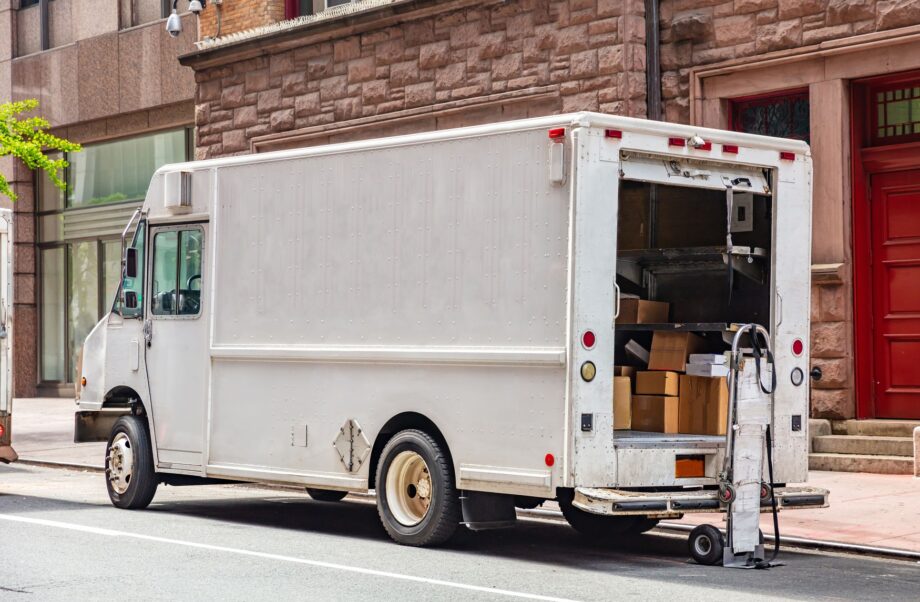
In a straightforward car accident, you’re dealing with one driver and one insurance company. In a delivery truck crash involving Amazon or FedEx, the potential defendant list is longer — and each party has their own insurer and their own legal team working to minimize their share.
Depending on the specifics of the crash, potentially liable parties may include:
The driver personally, for negligent operation — speeding, running a red light, distracted driving, or driving under the influence. On that last point, Texas Penal Code § 49.04 makes operating a motor vehicle while intoxicated a criminal offense, and a criminal charge or conviction becomes powerful evidence in the parallel civil case.
The delivery service partner or contractor company that directly employed the driver, under respondeat superior — the legal doctrine holding employers responsible for employees’ negligent acts committed within the scope of employment.
The brand-name corporation — Amazon, FedEx, UPS — if it exercised sufficient operational control over the driver, maintained negligent hiring or retention practices, or created the unrealistic delivery schedules that pressured drivers into cutting corners on safety.
Vehicle owners or lessors, if the delivery van was leased from a third-party fleet company that had maintenance obligations it failed to meet.
Texas’s proportionate liability system under Texas Civil Practice & Remedies Code § 33.013 allocates fault across all named defendants. Any defendant found more than 50% at fault can be held jointly and severally liable for all economic damages — meaning you can pursue full economic recovery from that party regardless of how liability is divided among the others. Identifying and naming every responsible party correctly from the beginning is essential to maximizing recovery.
Delivery truck crashes generate a significant electronic trail — arguably more than standard 18-wheeler cases, because companies like Amazon operate some of the most sophisticated real-time tracking systems in the logistics industry.
At the time of the crash, Amazon’s systems may have been recording the driver’s GPS location, speed, acceleration, braking events, and delivery scan data in real time. The driver’s Amazon Flex or DSP app generates logs. Dashcam footage from the vehicle — standard on many Amazon vans — may have captured the moments before impact from multiple angles. Fleet telematics systems record route data, stop duration, and driving behavior metrics continuously.
FedEx and UPS operate similar tracking and monitoring infrastructure. This data exists and it is detailed. The question — as always in commercial vehicle cases — is whether it still exists by the time someone asks for it.
None of these companies are required to retain operational data indefinitely. Retention policies vary, and data gets overwritten or purged on schedules that can be as short as 30 days for some systems. A spoliation letter — a formal legal notice demanding preservation of all relevant evidence — needs to go to the brand-name corporation, the DSP or contractor, their respective insurers, and any third-party fleet or technology providers, as early as possible after the crash.
Under Texas procedural rules, once a party receives a preservation notice and then destroys or allows evidence to be lost, courts can impose significant sanctions including adverse inference instructions — the jury gets told to assume the missing evidence would have hurt the defendant. That consequence only materializes if the preservation letter goes out before the data disappears.
The two-year statute of limitations under Texas Civil Practice & Remedies Code § 16.003 sets the outer filing deadline, but the practical evidence deadline is much shorter. Acting within the first two to four weeks after a serious delivery truck crash in Dallas is not overly cautious — it’s necessary.
The damages framework for a delivery truck injury case in Texas is the same as for any commercial vehicle crash — but the amounts in serious cases can be substantial, particularly when the injuries are severe and multiple defendants carry separate insurance policies.
Economic damages include all past and future medical costs, lost wages, diminished earning capacity, vehicle damage, and out-of-pocket expenses connected to the crash. Future medical costs — calculated through expert testimony from treating physicians and life care planners — are often the largest component in serious injury cases and the most commonly undervalued in early settlement offers.
Non-economic damages — pain and suffering, mental anguish, physical impairment, disfigurement, and loss of enjoyment of life — carry no statutory cap in Texas personal injury cases against delivery companies. The caps under Texas Civil Practice & Remedies Code § 41.008 apply to medical malpractice, not to negligence claims against Amazon, FedEx, or their contractors.
When a delivery company’s conduct involves reckless disregard for safety — unrealistic delivery quotas that incentivize dangerous driving, retention of drivers with documented histories of accidents, or systematic pressure to prioritize speed over compliance — Texas Civil Practice & Remedies Code § 41.003 allows for exemplary damages on top of compensatory ones. The standard is conscious indifference to an extreme degree of risk — and documented corporate delivery practices that prioritize metrics over safety can meet that threshold.
Modified comparative fault under Texas Civil Practice & Remedies Code § 33.001 applies here as in all Texas personal injury cases — your recovery is reduced by your fault percentage and eliminated above 50%. Delivery company insurers will probe for any evidence that you contributed to the crash. What you say at the scene, in recorded statements, and in early communications with adjusters all feeds into that analysis.
Does it matter whether the Amazon driver was using their own car or a company van? Yes — it affects which insurance applies and who can be held liable. Amazon’s commercial insurance policy covers drivers operating Amazon-branded vehicles through DSP partners. Drivers using personal vehicles for Amazon Flex deliveries may be covered under a different layer of Amazon’s insurance or their own personal policy, depending on what they were doing at the exact moment of the crash. An attorney can determine which policies apply and whether Amazon’s commercial coverage is accessible given the specific facts.
What if the FedEx or UPS driver fled the scene after hitting me? Leaving the scene of an accident causing injury is a criminal offense under Texas Transportation Code § 550.021. Even if the driver fled, the vehicle’s DOT number, license plate, and company branding typically allow identification of the carrier and driver through police investigation and the company’s own dispatch records. The corporate employer remains potentially liable regardless of the driver’s post-crash conduct.
Can I still recover compensation if I was partially at fault for the delivery truck crash? Yes, as long as your fault is 50% or less under Texas’s modified comparative fault rule at Texas Civil Practice & Remedies Code § 33.001. Your recovery is reduced proportionally by your percentage of fault — so 20% fault on your part reduces a $400,000 recovery to $320,000. Delivery company insurers will work hard to push your fault percentage up, which is exactly why what you say early in the process matters so much.
Amazon and FedEx have legal teams whose job is to protect the corporation, not to fairly compensate the people their drivers injure. Navigating the contractor structures, insurance layers, and evidence timelines in these cases requires someone who has done it before.
Visit our Dallas Truck Accident Attorneys page to learn how these cases are built and what compensation Texas law allows you to pursue against delivery companies and their contractors.
No fees unless there’s a recovery. No cost to consult. And the sooner you start, the more of that tracking data still exists.