
A reportable crash happens in Texas roughly once every minute, and more than a quarter-million people were injured in Texas traffic crashes in a single recent year.[^1] Statistically, most Dallas-area drivers will be in at least one collision serious enough to matter. What separates a clean, well-handled claim from a drawn-out, contested mess almost always comes down to what happens in the first hour, the first week, and the first two years.
This guide walks through exactly what to do — and what to avoid — after a car accident in Texas, with the specific state laws, deadlines, and fault rules that generic national checklists tend to skip.
Before anything else, check yourself and your passengers for injuries. If anyone is seriously hurt, don’t attempt to move them unless they’re in immediate danger (fire, oncoming traffic) — moving someone with a spinal or head injury can make things worse.
If the vehicles are drivable and no one is seriously injured, Texas law actually expects you to clear the roadway when possible. Move to the shoulder, a parking lot, or the nearest safe area to avoid a secondary collision. Turn on your hazard lights and, if you have them, set out road flares or triangles, especially on a highway like I-35E, I-30, or the LBJ Freeway where traffic doesn’t slow down for a stalled car.
If a vehicle is disabled in a live lane and can’t be moved, stay inside with your seatbelt on (if it’s safer than exiting into traffic) and call 911 immediately.
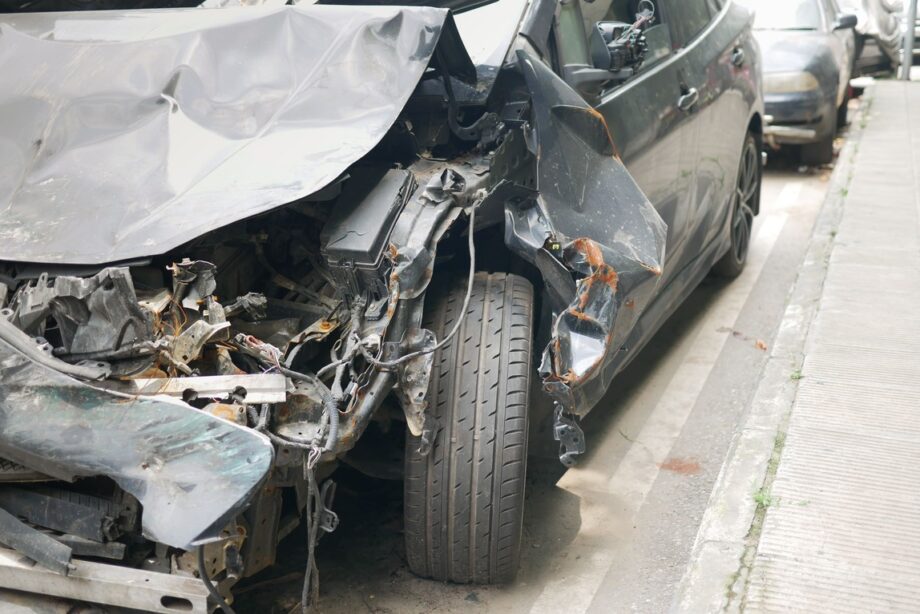
Under Texas Transportation Code § 550.026, you’re legally required to notify police if the crash resulted in injury, death, or property damage that appears to be $1,000 or more.[^2] In practice, that threshold gets crossed by almost any accident beyond a light cosmetic scuff — modern bumpers, sensors, and paint work add up fast.
When an officer responds and the crash meets that threshold, they file a Peace Officer’s Crash Report, known as the CR-3, within 10 days.[^3] This is the official record insurance companies, and later a court, will rely on to sort out what happened.
What if police won’t come out for a “minor” accident? It happens, especially for low-speed fender-benders. If that’s the case, Texas no longer accepts self-filed driver reports (the old CR-2 “Blue Form” was discontinued for state filing purposes in 2017, and TxDOT stopped retaining old copies in 2019).[^4] That makes it even more important to document the scene yourself, since there may be no official law-enforcement report to fall back on later.
Failing to report a crash that meets the injury or $1,000 threshold isn’t just a bad idea — it’s a Class C misdemeanor that can carry a fine of up to $500, and if you fail to stop and give information, that penalty can escalate significantly depending on the severity of the crash.[^2]
Once everyone is safe, start documenting. Insurance adjusters and, if it comes to it, attorneys will lean heavily on what you capture in these first few minutes.
Photograph:
Collect:
A quick callout on dashcams: If you have one, don’t clear the footage. Dashcam video is some of the cleanest evidence available in a disputed-fault case, and it can settle an argument that would otherwise come down to one driver’s word against another’s.
This is one of the most commonly overlooked steps. Adrenaline makes people talkative, apologetic, and quick to speculate — none of which helps you.
Adrenaline masks pain. Soft-tissue injuries, concussions, and some spinal injuries can take 24–72 hours (or longer) to fully present. Two practical reasons to get checked out even when you feel okay:
Keep every record: ER or urgent care paperwork, follow-up visits, physical therapy, prescriptions, and receipts. If you have Personal Injury Protection (PIP) on your policy, it can cover a portion of medical costs and lost income regardless of who caused the crash — Texas insurers are required to offer PIP, though you can decline it in writing.[^5]
Most policies require “prompt” notice of a crash, and waiting too long can technically give an insurer grounds to dispute coverage — even for an accident that wasn’t your fault. Report the basic facts: date, location, other driver’s information, and whether there were injuries.
Two things worth knowing before you say more than that:
This is the part most generic checklists skip entirely, and it’s often the single biggest factor in what a claim is actually worth.
Texas follows a modified comparative negligence system, sometimes called proportionate responsibility, under Texas Civil Practice and Remedies Code § 33.001. In plain terms:
Example: A jury finds total damages of $100,000. If you’re found 20% at fault, you recover $80,000. If you’re found 51% at fault, you recover $0 — even though the other driver was still majority responsible.
Because a single percentage point can be the difference between a payout and nothing, insurance adjusters have a real financial incentive to nudge your share of fault above that line. This is exactly the kind of dispute where the documentation from Step 3 and the statement discipline from Step 4 end up mattering most.
Roughly 1 in 8 Texas drivers is uninsured.[^7] Texas insurers are required to offer Uninsured/Underinsured Motorist (UM/UIM) coverage, though you can reject it in writing — which is one reason many Texas drivers unknowingly have none. If you’re hit by an uninsured or underinsured driver and don’t have UM/UIM coverage, your options narrow to your own PIP/MedPay coverage or pursuing the other driver personally, which is often difficult if they have limited assets.
Leaving the scene of an accident involving injury or property damage over $1,000 without stopping to exchange information is a criminal offense in Texas, with penalties that scale up sharply if there’s injury or death involved.[^2] If you’re hit by a driver who flees:
Texas Civil Practice and Remedies Code § 16.003 sets a two-year statute of limitations for personal injury and property damage claims arising from a car accident, running from the date of the crash.[^8] Miss that window, and in most cases you permanently lose the right to sue, no matter how strong the underlying case is.
Two years sounds like a lot of time. In practice, it isn’t:
There are limited exceptions (for minors, for someone deemed legally incapacitated at the time, or in certain “discovery rule” situations where an injury wasn’t immediately apparent), but none of these should be assumed to apply without confirming it with a professional. Claims against a government entity — a city vehicle, a Dallas Area Rapid Transit (DART) bus, a county-maintained road defect — carry a much shorter notice deadline, sometimes as little as six months, so treat those very differently from a standard driver-on-driver crash.
Once the CR-3 is filed, you (or your representative) can request a copy through TxDOT’s Crash Report Online Purchase System or from the investigating agency.[^9] Read it carefully. Officers reconstruct these reports from a brief on-scene investigation, and errors — a misidentified lane, a wrong contributing-factor code, an inaccurate narrative — happen more often than people expect.
If something is factually wrong, you generally can’t just have the report rewritten, but you can:
Not every accident needs one. A minor fender-bender with no injuries, clear fault, and a cooperative insurer is often resolved fine without legal help.
A few situations where getting a legal opinion is genuinely worth the conversation:
Most personal injury attorneys in Texas work on contingency, meaning there’s no upfront cost and no fee unless you recover compensation — so getting a case reviewed generally costs nothing but the time it takes to have the conversation.
| Situation | Police Report | Medical Care | Insurance Contact | Legal Consultation |
|---|---|---|---|---|
| Minor, no injuries, clear fault, damage under $1,000 | Optional; document yourself | Self-monitor for 72 hours | Notify your insurer | Usually not needed |
| Damage over $1,000, no injuries | Required by law | Get checked if any pain develops | Notify both insurers; avoid recorded statement to other side | Worth a free consultation if fault is disputed |
| Any injury, however minor-seeming | Required by law | See a doctor same day if possible | Notify your insurer; be cautious with the other side | Strongly recommended |
| Hit-and-run or uninsured driver | Required immediately | Get checked promptly | Notify your own insurer, check UM/UIM | Strongly recommended |
| Government vehicle involved | Required | Get checked promptly | Notify your insurer immediately | Recommended — deadlines are much shorter |
What is the first thing you should do after a car accident? Check for injuries and get to a safe location if the vehicle is drivable. Only after everyone’s safety is addressed should you move on to calling police and documenting the scene.
Do I have to call the police for a minor accident in Texas? Yes, if there’s an injury or the damage appears to be $1,000 or more, Texas law requires you to notify police. Given today’s repair costs, most accidents beyond very light cosmetic damage cross that line.
What happens if you don’t report a car accident in Texas? Failing to report a crash that meets the injury or $1,000 damage threshold is a criminal offense, and it also leaves you without an official record if a dispute over fault or damages comes up later.
How long do I have to file a claim after a car accident in Texas? Two years from the date of the crash for a personal injury or property damage lawsuit, under Texas Civil Practice and Remedies Code § 16.003. Claims against a government entity have much shorter notice deadlines.
Who is at fault in a car accident with no witnesses? Fault is determined from the available evidence: the CR-3 report, physical evidence (skid marks, vehicle damage patterns), dashcam footage if available, and each driver’s statements. This is exactly why documenting the scene thoroughly matters so much.
What should I not say after a car accident? Avoid apologizing, admitting fault, or speculating about speed or distance. Stick to factual observations with the officer and keep communication with the other driver brief and neutral.
Should I get a lawyer for a minor car accident? Not always. If there are no injuries, fault is clear, and the insurer is cooperative, most people handle it without one. If any of those aren’t true, a free consultation is generally worth the conversation.
What if the other driver doesn’t have insurance? If you have Uninsured/Underinsured Motorist coverage, that policy can step in. Without it, options are more limited — your own PIP/MedPay coverage or pursuing the other driver directly, which can be difficult to collect on.
Every accident is a little different, and the details above are general information, not legal advice for your specific situation. If you’ve been in a crash in the Dallas area and you’re unsure whether you need legal help — especially with injuries, a disputed fault determination, or an uninsured driver involved — you can request a free, no-obligation case review to talk through what happened and understand your options. If you have any more questions, don’t hesitate to contact us.
[^1]: TxDOT crash frequency and 2024 injury figures, as cited by McGilberry & Shirer LLP, “What’s the Statute of Limitations on Personal Injury in Texas?”
[^2]: Texas Transportation Code § 550.026; reporting and hit-and-run penalty context via Dallas Car Accident Lawyers and Branch & Dhillon, P.C.
[^3]: 43 Tex. Admin. Code § 25.977; TxDOT Crash Reports and Records.
[^4]: FindLaw, “Texas Car Accident Report Basics”; Branch & Dhillon, P.C., “How to Make a Police Report After a Car Accident in Texas.”
[^5]: Insurify, “What Is 30/60/25 Insurance in Texas?”; Amtex Insurance, “Minimum Car Insurance Required in Texas 2026.”
[^6]: Texas Civil Practice and Remedies Code § 33.001; Super Lawyers, “Personal Injury Damages and Proportionate Responsibility.”
[^7]: Reyes Law, “Texas Minimum Car Insurance Requirements Explained,” citing Insurance Research Council (2023).
[^8]: Texas Civil Practice and Remedies Code § 16.003; verified across multiple current Texas personal injury law sources.
[^9]: TxDOT Crash Report Online Purchase System.